

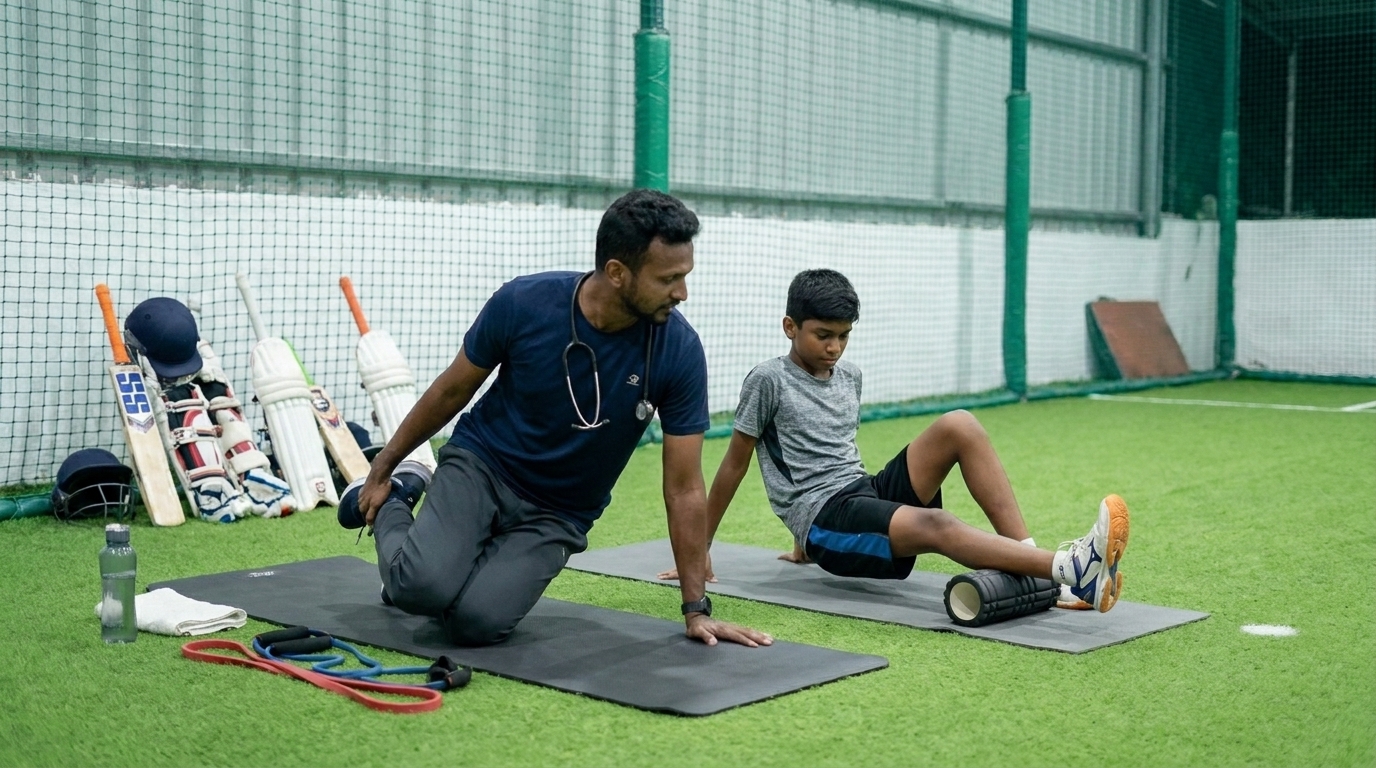
A cricket session does not finish when the final ball is delivered. What a player does afterwards can affect comfort, readiness and performance in the next session.
Recovery does not require complicated equipment or expensive products. For most recreational players, the foundations are simple: gradually reduce activity, replace fluids, eat appropriately, rest and respond to unusual symptoms.
The following routine provides general guidance. Individual recovery needs vary.
Begin With a Gradual Cool-Down
After an intense game, avoid moving immediately from full effort to complete inactivity.
Spend several minutes reducing the intensity. This may include:
- Slow walking;
- Gentle movement;
- Relaxed breathing;
- Light arm movement; and
- Comfortable mobility exercises.
A gradual cool-down allows the player to transition from high activity to rest.
NHS guidance provides a general cool-down routine lasting approximately ten minutes.
Stretching should feel controlled. Avoid forcing a painful position.
Replace Lost Fluids
Cricket players may lose fluid through sweat, even in an indoor environment. Heat, humidity, session intensity, clothing and individual sweat rate all affect fluid needs.
Players should begin sessions reasonably hydrated and drink according to their needs during and after activity.
Water is suitable for many shorter or lighter sessions. Longer, more demanding sessions may require additional consideration of fluid, carbohydrate and electrolytes.
The Australian Institute of Sport identifies hydration as an important part of performance and recovery planning. It also notes that sports drinks can provide both fluid and carbohydrate when simultaneous hydration and refuelling are required.
However, sports drinks are not automatically necessary for every person or session.
Eat a Balanced Recovery Meal
After training, the body needs energy and nutrients.
A practical recovery meal may contain:
- A carbohydrate source;
- A protein source;
- Vegetables or fruit;
- Fluids; and
- Other foods appropriate to the individual.
Sri Lankan meal ideas may include:
- Rice with fish, chicken, egg or dhal and vegetables;
- Roti with egg and vegetables;
- String hoppers with dhal and a protein source;
- Yoghurt with fruit;
- A milk-based drink and a simple meal; or
- A sandwich with egg, chicken or another suitable filling.
The Australian Institute of Sport explains that well-planned nutrition supports athlete health, training and performance.
Players do not need to copy professional athletes’ diets. The meal should match their age, health, culture, preferences and training load.
Do Not Depend on Supplements
Supplements are often promoted as fast solutions for energy, muscle growth or recovery. Marketing claims may be stronger than the available evidence.
The Australian Institute of Sport advises athletes not to take supplements without first consulting a sports doctor or accredited sports dietitian. It also notes that no supplement can be considered completely risk-free.
Most recreational players should first focus on regular meals, sleep, hydration and sensible training.
Young players should not begin supplements based on social-media advice.
Change Out of Wet Clothing
Remaining in sweaty clothing may be uncomfortable and can contribute to skin irritation.
After a session:
- Change into clean, dry clothing;
- Dry the feet carefully;
- Clean and air footwear;
- Wash reusable protective equipment when appropriate; and
- Allow gloves, pads and guards to dry.
Regular equipment care also reduces unpleasant odours and helps identify damage.
Review Any Pain or Injury
Players should distinguish between ordinary tiredness and symptoms that may need attention.
Check for:
- Localised pain;
- Swelling;
- Reduced movement;
- Significant bruising;
- Head impact symptoms;
- Weakness;
- Numbness; or
- Pain that changes normal walking or movement.
Severe or concerning symptoms require prompt medical attention.
Do not use pain-relieving medication simply to hide an injury and continue playing without appropriate advice.
Prioritise Sleep
Sleep supports physical and mental recovery. A tired player may have slower reactions, reduced concentration and lower motivation.
A useful post-session routine may include:
- Finishing intense activity with enough time to settle;
- Eating and hydrating;
- Reducing unnecessary screen use close to bedtime;
- Preparing clothing and equipment for the next day; and
- Maintaining a consistent sleep schedule.
Young athletes also need to balance sport with school, family responsibilities and adequate rest.
Use the Next Day Wisely
The day after cricket does not always need to be complete bed rest. Light activity may feel comfortable for some players.
Options may include:
- Easy walking;
- Gentle mobility;
- Relaxed cycling;
- Light stretching; or
- Normal daily activity.
The choice depends on how the person feels and what training is planned next.
A player with significant pain or unusual fatigue should reduce activity and seek guidance where needed.
Keep a Simple Recovery Record
Players training regularly can record:
- Session duration;
- Session intensity;
- Fluid intake;
- General energy;
- Sleep;
- Pain or soreness; and
- Readiness for the next session.
This does not need to be complicated. A one-to-five rating may be enough.
Patterns can help identify whether a player is recovering well or repeatedly training while tired.
Avoid Copying Elite Recovery Trends
Professional athletes may use ice baths, compression garments, massage and specialised monitoring. These methods are not necessarily required for every recreational player.
The Australian Institute of Sport’s recovery resources cover areas such as hydration, nutrition, compression and water immersion, but recovery strategies should be selected for a clear reason rather than because they are fashionable.
The foundations remain more important than advanced tools.
A Simple Post-Cricket Checklist
After your SportE session:
- Walk and cool down gradually.
- Drink suitable fluids.
- Eat a balanced meal or snack.
- Change into dry clothing.
- Check for pain or injury.
- Clean and dry your equipment.
- Plan adequate sleep.
- Adjust the next session if recovery is poor.
Recovery Support at SportE
SportE Indoor Arena provides sports recovery and rehabilitation services for players who require professional support.
A recovery plan may help players manage discomfort, restore movement, rebuild strength and return to activity with confidence.
Good recovery is not about avoiding all tiredness. It is about helping the body adapt while recognising when it needs additional rest or medical attention.