

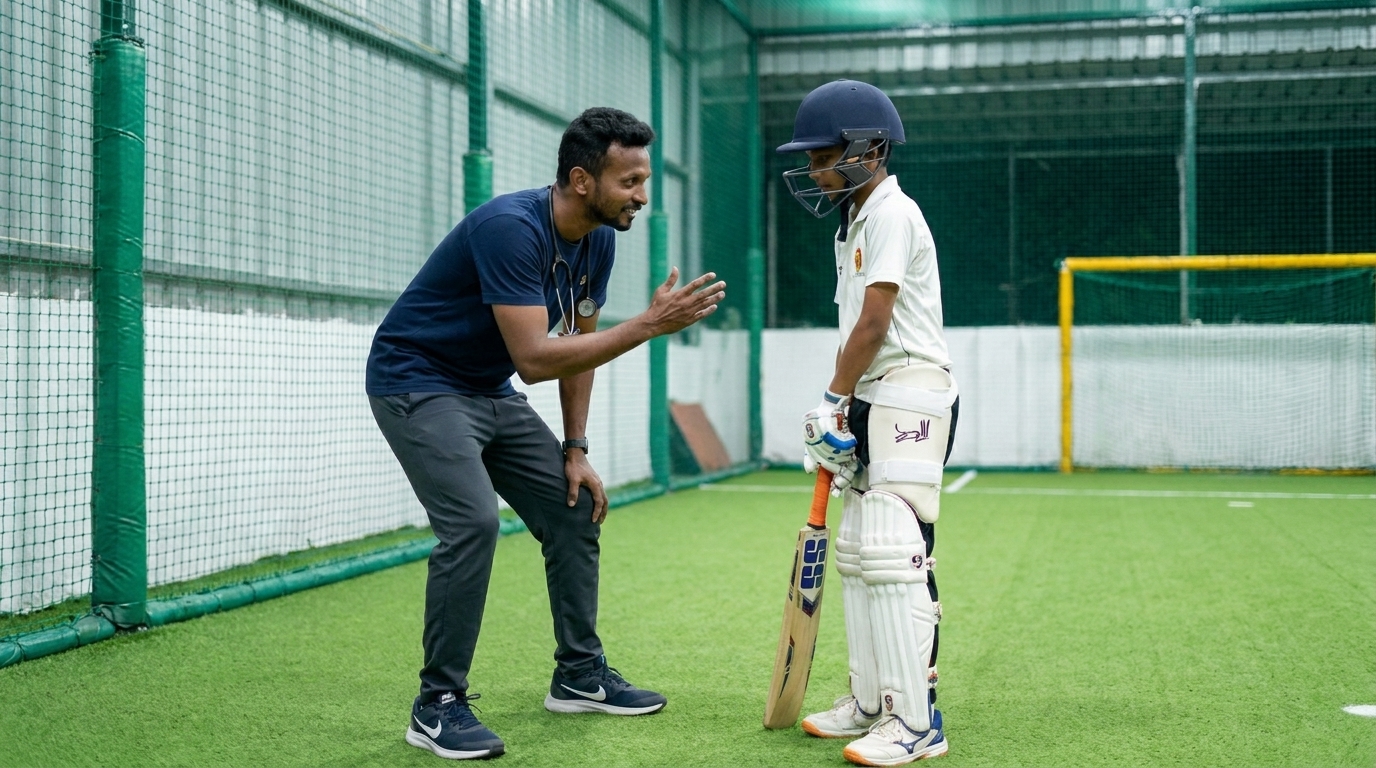
Many players wait until an injury becomes severe before asking for medical advice. Some believe pain is simply part of sport, while others worry that a consultation will automatically stop them from playing.
Sports medicine is not only for professional athletes or major injuries. It can support recreational players, young athletes, active adults and people returning to exercise.
Knowing when to seek help can prevent a manageable concern from becoming a longer interruption.
Pain That Does Not Improve
Temporary muscle tiredness can occur after exercise, especially when a player begins a new activity. However, pain that continues, returns during every session or becomes progressively worse should be assessed.
Examples include:
- Shoulder pain during bowling;
- Back pain after training;
- Knee pain when running;
- Ankle pain when changing direction;
- Wrist pain while batting; or
- Groin pain during acceleration.
The cause may relate to training volume, technique, strength, mobility, equipment or an underlying injury.
Swelling or Reduced Movement
Swelling may occur following a sprain, impact or irritation. A joint that becomes swollen, stiff or difficult to move may require professional assessment.
Players should also seek advice when they cannot:
- Fully straighten or bend a joint;
- Walk normally;
- Grip the bat;
- Throw comfortably;
- Lift the arm;
- Run without changing technique; or
- Perform usual cricket movements.
Continuing with altered movement can place extra stress on other areas.
Repeated Injuries
An injury that keeps returning may indicate that the original problem was not fully addressed.
For example, repeated ankle sprains may be associated with balance or stability difficulties. Recurring hamstring pain may relate to strength, running load or an incomplete return to sport.
A sports medicine consultation can examine the wider situation rather than treating each episode as an unrelated event.
A Sudden Injury During Play
A player should stop and seek appropriate help after a sudden injury involving severe pain, loss of function, major swelling or visible deformity.
Possible serious injuries require urgent evaluation. Emergency services should be contacted for life-threatening symptoms, significant head injury, breathing problems, chest pain, collapse or loss of consciousness.
A website booking system should never be used as a substitute for urgent medical care.
Returning After a Long Break
Players returning after exams, work commitments, illness, travel or a long period without exercise may benefit from medical or professional guidance.
The body may not be ready for the same workload it previously handled. Returning immediately to fast bowling, repeated sprinting or long matches can increase physical stress.
A gradual return plan can include:
- Basic conditioning;
- Mobility;
- Strength;
- Controlled cricket practice;
- Partial-intensity sessions; and
- Progressive match participation.
Returning After an Injury
Feeling “better” does not always mean a player is ready for full competition.
Before returning, the player may need suitable:
- Movement;
- Strength;
- Balance;
- Endurance;
- Confidence;
- Cricket-specific skill; and
- Ability to tolerate training load.
Return-to-sport guidance recommends rebuilding strength and movement, reintroducing the activity gradually and focusing on technique.
The return plan should be individualised rather than based only on a fixed number of days.
Concerns About Bowling Workload
Bowling involves repeated high-force movement. Players who experience pain, fatigue or a decline in technique may need workload review.
This is especially important for young fast bowlers. Growth, school matches, private training and club sessions can combine into a high total workload even when each individual session seems reasonable.
A consultation may help evaluate symptoms and decide whether rest, rehabilitation, technique support or further investigation is required.
Questions About Safe Exercise
A player does not need to be injured to book a consultation.
Medical advice may be helpful when someone:
- Has a long-term health condition;
- Is returning after surgery;
- Has experienced dizziness or fainting;
- Has breathing concerns;
- Takes medication affecting exercise;
- Is unsure about safe activity intensity;
- Wants to begin sport after a long inactive period; or
- Needs advice about participating with an existing condition.
The consultation can help identify precautions and suitable next steps.
Need for a Fitness or Return-to-Play Assessment
A school, employer, sporting organisation or event may request medical information about participation.
A healthcare practitioner will decide whether a certificate or fitness assessment is clinically appropriate. A requested clearance cannot always be issued immediately, particularly when further assessment or testing is needed.
The purpose of a return-to-play assessment is to support safe participation, not simply to complete paperwork.
Recovery Is Not Progressing
Some injuries improve with basic care and gradual activity. Others remain painful or limit function despite time and rest.
A player should consider consultation when:
- Symptoms are unchanged;
- Progress has stopped;
- Exercises increase pain significantly;
- The injury affects sleep or daily activity;
- The player cannot return to training; or
- Confidence remains very low.
A review may identify whether the diagnosis, activity level or recovery plan needs to change.
What Happens During a Sports Medicine Consultation?
A consultation may include discussion of:
- The current problem;
- How and when it began;
- Training and match workload;
- Previous injuries;
- General medical history;
- Medication;
- Sporting goals;
- Movement and function; and
- Activities that increase or reduce symptoms.
The practitioner may then provide advice, recommend treatment, develop a rehabilitation plan or arrange further investigation or referral.
No responsible practitioner can guarantee a specific recovery date or sporting result.
Prepare for Your Appointment
Players can make the consultation more useful by bringing:
- A list of symptoms;
- The date the problem began;
- Details of the injury event;
- Relevant medical reports;
- Medication information;
- Previous test results;
- Current training schedule; and
- Questions they want answered.
Honest information helps the practitioner make safer decisions.
Do Not Hide Symptoms
Players sometimes minimise pain because they fear losing a position in the team. However, hiding important symptoms may delay suitable care.
Health information is generally treated confidentially. Where a fitness report is required, only the information necessary for that purpose should ordinarily be shared.
Book With SportE Indoor Arena
SportE offers general medical and sports medicine consultations alongside indoor cricket, recovery and rehabilitation services.
Players can receive guidance in an environment that understands the connection between health, movement and sport.
Seeking advice is not a sign of weakness. It is a responsible step towards safer participation and long-term performance.